
The Question Every Homeowner Asks First
You've been dreaming about a new kitchen for months — maybe years. You've saved up, browsed Pinterest boards until your eyes glazed over, and you're finally ready to pull the trigger. But before you commit, there's one question that stops almost every homeowner in their tracks: how long is this actually going to take?
It's a fair question. Your kitchen is the most-used room in your house, and being without it for weeks (or longer) is a big deal. The problem is that the answer you'll find online ranges wildly — anywhere from four weeks to six months — and none of it feels specific enough to be useful.
So let's fix that. Here's a realistic, phase-by-phase breakdown of what a kitchen remodel timeline looks like for most San Diego homeowners, along with the factors that can speed things up or slow things down.
The Short Answer
For a mid-range kitchen remodel — we're talking new cabinets, countertops, flooring, lighting, and appliances with some layout changes — most projects take 8 to 14 weeks from demolition to the final walkthrough. A smaller cosmetic refresh might wrap up in 4 to 6 weeks. A large-scale gut renovation with structural changes can push past 16 weeks.
But those numbers only tell part of the story. The timeline that catches most people off guard isn't the construction itself — it's everything that happens before the first hammer swings.
Phase 1: Design and Planning (3–6 Weeks)
This is the phase most homeowners underestimate. Before any permits are pulled or materials are ordered, you need a clear plan. That means:
- Finalizing your layout and design with your contractor or designer
- Selecting cabinets, countertops, tile, fixtures, flooring, and appliances
- Getting a detailed scope of work and project estimate
- Making decisions about electrical, plumbing, or structural changes
This phase can move quickly if you're decisive, or it can stretch out if you're weighing a lot of options. Neither is wrong — rushing decisions here almost always leads to regret later. Take the time you need, but know that every week of indecision adds a week to your overall timeline.
Phase 2: Permits and Material Lead Times (2–6 Weeks)
If your remodel involves any electrical, plumbing, or structural work — and most kitchen remodels in San Diego do — you'll need permits from the city. Permit turnaround times vary, but in the San Diego area, you can generally expect 2 to 4 weeks for standard residential permits.
At the same time, your contractor should be ordering materials. This is where lead times can make or break your schedule. Stock cabinets might arrive in 2 to 3 weeks. Semi-custom or custom cabinets? That can be 6 to 10 weeks. Specialty tile, imported fixtures, or certain countertop slabs can also add delays.
Pro tip: A good contractor will overlap the permit and ordering process so you're not waiting on one after the other. Ask about this during your initial consultations — it's a sign of someone who manages timelines well.
Phase 3: Demolition and Rough Work (1–2 Weeks)
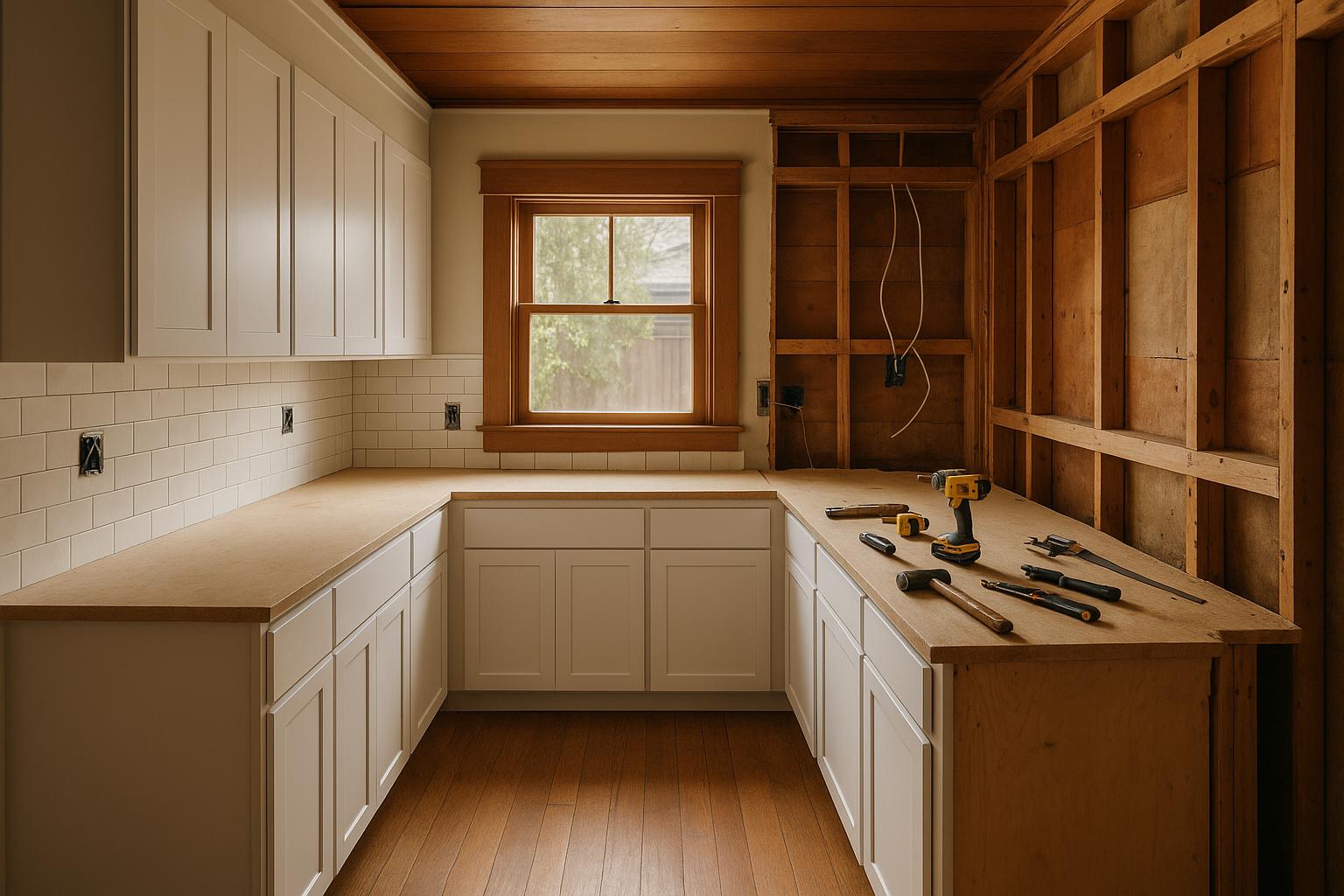
This is when things finally start happening. Old cabinets come out, flooring gets pulled up, and the room gets stripped down to its bones. If you're moving walls, adding windows, or changing the layout, structural work happens here too.
Rough plumbing and electrical are also done during this phase. If your new layout moves the sink, adds an island with outlets, or upgrades your lighting plan, the behind-the-wall work has to happen before anything pretty goes in.
Inspections are typically required at this stage before you can close up the walls. In San Diego, scheduling inspections usually takes a few days, so your contractor should plan for that buffer.
Phase 4: Installation (3–5 Weeks)
This is the longest and most visible phase, and it's where your new kitchen starts to take shape. The general order of operations looks like this:
- Drywall repair and painting — Patching and prepping walls after rough work
- Flooring installation — Tile, hardwood, or luxury vinyl goes in
- Cabinet installation — The biggest visual transformation
- Countertop templating and installation — Templating happens after cabinets are set, then fabrication takes about 1 to 2 weeks before install
- Backsplash tile — Installed after countertops are in place
- Fixture and appliance installation — Sinks, faucets, lighting, range hood, dishwasher, and everything else
Each of these steps depends on the one before it, which is why the sequencing matters so much. A delay in cabinets pushes back countertop templating, which pushes back the backsplash, which pushes back final plumbing connections. One hiccup can ripple through the whole schedule.
Phase 5: Final Details and Walkthrough (3–5 Days)
The home stretch. This includes final paint touch-ups, hardware installation, outlet cover plates, caulking, and a thorough cleaning. Your contractor should walk through the finished kitchen with you, note any punch-list items, and make sure everything meets your expectations before calling the project complete.
What Can Delay a Kitchen Remodel?
Even with the best planning, delays happen. Here are the most common culprits we see in San Diego remodels:
- Material backorders — Supply chain issues have improved but haven't disappeared entirely. Ordering early is your best defense.
- Permit delays — Occasionally the city needs additional documentation or revisions to plans.
- Hidden surprises — Old homes in neighborhoods like North Park, Kensington, and Hillcrest sometimes reveal outdated wiring, plumbing issues, or water damage once walls are opened up. These need to be addressed before moving forward.
- Change orders — Changing your mind mid-project is your right, but every change takes time to price, source, and execute.
- Inspection scheduling — City inspectors have their own calendars, and sometimes there's a wait.
How to Keep Your Remodel on Schedule
You have more control over the timeline than you might think. Here's what helps:
- Make material selections early. The sooner your cabinets, countertops, and fixtures are ordered, the sooner they arrive.
- Be available for decisions. Quick responses to questions from your contractor prevent work stoppages.
- Trust the process. A contractor who builds in buffer time isn't being slow — they're being realistic.
- Hire a contractor who communicates clearly. You should always know what's happening this week and what's coming next. If you're constantly guessing, that's a red flag.
The Bottom Line
A kitchen remodel is a significant investment of both money and time. For most San Diego homeowners, the full process — from first design meeting to final walkthrough — takes roughly 3 to 5 months. The construction phase itself is usually 8 to 14 weeks, but the planning and material lead times on the front end are what set the pace.
The best thing you can do is start the conversation early, even if you're not ready to begin construction for a few months. That gives you time to plan thoughtfully, order materials without rushing, and start your project with a clear, realistic timeline in hand.
At Ravenwood General Contractors, we walk our clients through every phase of the process so there are no surprises — just a beautiful kitchen delivered on a schedule you understood from day one. If you're considering a kitchen remodel in San Diego, we'd love to talk about what's possible for your home.